Lost in Translation? Cairo’s Cultural Clashes That Caught Me Off Guard
Ever landed in Cairo thinking you’re ready for the pyramids and history, only to realize the real adventure is navigating cultural currents no guidebook warned you about? I did. From well-meaning but awkward interactions to traditions I completely misread, my trip became less about sightseeing and more about understanding. What I didn’t expect? How much the little things—gestures, pace, personal space—could shape an entire journey. This is not just travel; it’s cultural immersion with all its beautiful, confusing honesty.
First Impressions: The Sensory Onslaught of Cairo
The moment the plane touched down at Cairo International Airport, the rhythm of life changed. Gone was the quiet efficiency of Western terminals, replaced by a symphony of overlapping voices, echoing announcements in Arabic, and the scent of cardamom-laced coffee drifting through the arrivals hall. Customs officers moved with deliberate calm while travelers surged forward, suitcases bumping against one another. There was no rigid queue—just a fluid, almost choreographed sense of movement that felt chaotic at first glance, yet somehow worked. I realized quickly that Cairo does not operate on precision; it operates on presence.
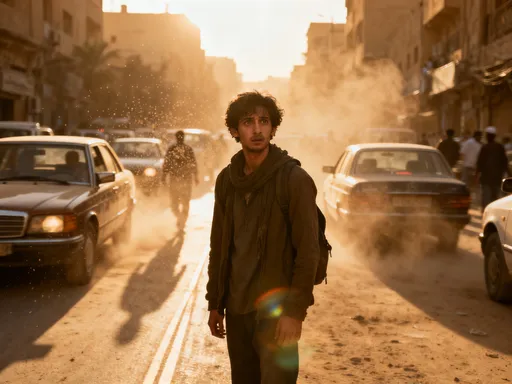
Stepping outside into the humid night air, I was immediately enveloped by a wall of sound. Horns blared not in anger but as punctuation—short bursts to say “I’m here,” “coming through,” or even “watch out.” A taxi driver waved me over with a smile, his hand outstretched not for money, but in greeting. Inside the cab, the radio played Umm Kulthum at full volume, the legendary voice weaving through the city’s pulse. As we merged into traffic, I noticed something surprising: no one seemed angry. Despite the constant honking, swerving, and near misses, there was an unspoken understanding, a shared rhythm that kept everything moving forward.
This sensory overload masked deeper cultural signals that many travelers miss. In the West, silence is often valued, personal space respected, and direct eye contact seen as a sign of confidence. In Cairo, the opposite can be true. Closeness is warmth, noise is connection, and prolonged eye contact might be interpreted as challenge rather than engagement. My initial discomfort—feeling crowded, overwhelmed, even slightly anxious—was rooted in unmet expectations. I had come prepared for ancient monuments, but not for the living culture that surrounded them.
Over time, I began to see the method in the apparent madness. The chaos wasn’t disorder; it was a different kind of order—one built on relationship, intuition, and shared context. What looked like disorganization was, in fact, a deeply ingrained social fabric where people relied on each other in ways I hadn’t anticipated. A stranger would point me in the right direction without being asked. A shopkeeper would offer water when he saw me wiping sweat from my brow. These small acts weren’t transactions; they were expressions of belonging, even if I was only passing through.
The Myth of the “Typical Tourist Route”
Most visitors to Cairo follow a predictable path: the Pyramids of Giza at sunrise, a stroll through the bustling alleys of Khan El Khalili Bazaar, and a quiet morning at the Egyptian Museum. These are undeniably iconic, and rightly so. But relying solely on this itinerary risks reducing Egypt’s capital to a series of curated snapshots, polished for foreign eyes. What lies beyond—the residential neighborhoods, the side streets, the daily rituals of ordinary life—is where the city reveals its true character.
I learned this when I wandered away from the tourist trail one afternoon, drawn by the aroma of freshly baked baladi bread. I found myself in a quiet street near Al-Azhar, where men sat on low stools sipping tea, children chased a deflated football, and women in colorful scarves exchanged gossip outside a corner grocery. There were no signs in English, no hawkers calling out “special price for you!”—just life unfolding in its natural rhythm. It was here, in this unremarkable alley, that I felt more connected to Cairo than I had at any archaeological site.
Neighborhoods like Zamalek and Heliopolis offer another layer of insight. Zamalek, an island enclave on the Nile, feels calmer, greener, with tree-lined avenues and art galleries tucked between cafés. It’s a space where modernity and tradition coexist—where young professionals sip lattes while debating politics, and elderly women in long coats walk arm-in-arm with their daughters. Heliopolis, with its colonial-era architecture and wide boulevards, speaks to a different chapter of Egypt’s history, one shaped by cosmopolitan ideals and urban planning. These areas don’t erase the city’s complexity; they deepen it.
The danger of sticking only to the tourist route is not just missing authenticity—it’s reinforcing a version of culture that performs for outsiders. In Khan El Khalili, some vendors adopt exaggerated accents or recite rehearsed stories about pharaohs to entertain visitors. While often harmless, this “performative culture” can create a barrier between traveler and local. It turns real traditions into stage acts, and genuine hospitality into a sales tactic. The result? A distorted lens through which we view a people who are far more nuanced than any souvenir stall can convey.
Hospitality with a Side of Unspoken Rules
One of the most striking aspects of Egyptian culture is karam—generosity. It’s not just a value; it’s a social currency. From the moment I arrived, I was offered tea, coffee, water, and even full meals by people who had no reason to be kind to me. A tailor invited me into his shop not to sell, but to rest and drink mint tea. A fruit vendor insisted I try a slice of mango, smiling as I savored the sweetness. These gestures were not rare; they were routine.
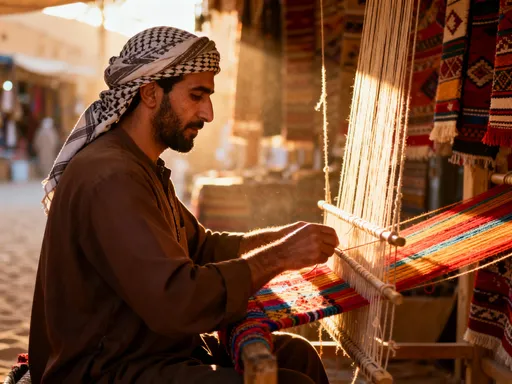
Yet, this generosity comes with unspoken expectations. Accepting a cup of tea from a shopkeeper might lead to a 20-minute conversation, during which he shows you every item in his store. Refusing outright can feel rude, but giving in can lead to pressure to buy. I remember sitting cross-legged on a carpet in a dimly lit shop in Islamic Cairo, sipping sweet tea while the owner unfolded one intricate textile after another. His kindness was genuine, but I could feel the subtle weight of obligation building. I wasn’t being tricked—but I was being drawn into a social dance I didn’t yet understand.
The key, I realized, was not to resist hospitality but to engage with awareness. Egyptians value relationship over transaction. When you accept tea, you’re not just accepting a drink—you’re accepting a moment of connection. The expectation isn’t always a sale; it’s recognition. A simple “thank you, but I’m just looking” said with warmth and eye contact is often enough. The goal isn’t to avoid interaction, but to navigate it with respect on both sides.
There’s also a deep pride in sharing culture. An elderly man once stopped me near the Mosque of Ibn Tulun to practice his English. We talked for nearly an hour about his childhood, his love of poetry, and his hopes for his grandchildren. He didn’t ask for money. He wanted to be seen. In that exchange, I understood that hospitality isn’t always about giving something material—it’s about offering a piece of oneself. And sometimes, the most meaningful response is simply to listen.
Misreading Social Cues: Gestures, Eye Contact, and Personal Space
One of the most common sources of cultural friction for Western travelers is the misinterpretation of nonverbal communication. In Cairo, a smile doesn’t always mean friendliness. A nod doesn’t always mean agreement. And standing close—very close—doesn’t always mean intrusion. These subtle differences can lead to confusion, discomfort, or even unintended offense.
I learned this the hard way when I smiled at a woman in the market, only to see her quickly look away and tighten her scarf. Later, I understood that in conservative areas, unsolicited smiles from strangers—especially men—can be seen as inappropriate. The same gesture that signals openness in New York or London might carry a different weight here. Similarly, direct eye contact, while a sign of confidence in many Western cultures, can be perceived as confrontational or overly familiar in certain contexts.
Personal space is another area of divergence. In crowded areas like metro stations or markets, bodies press together out of necessity, but even in quieter settings, Egyptians tend to stand closer during conversation than Americans or Northern Europeans. At first, this felt invasive. Over time, I recognized it as a sign of engagement—a physical manifestation of the importance placed on human connection. The lack of distance wasn’t a threat; it was an invitation to be present.
Communication styles also differ. Westerners often value directness—saying exactly what we mean. In Cairo, communication is more contextual, relying on tone, pause, and implication. A shopkeeper who says “maybe later” when asked about opening hours likely means “no,” but says it gently to avoid confrontation. Learning to “listen” with my eyes—to read facial expressions, posture, and rhythm—became more important than catching every word. It was a shift from linear understanding to holistic perception.
The Time Warp: Egyptian “Flexibility” vs. Tourist Schedules
If there’s one concept that defines the Egyptian approach to time, it’s inshallah—“if God wills.” It’s not an excuse, nor is it laziness. It’s a worldview that acknowledges the limits of human control. When a guide says, “We’ll start at 9 a.m., inshallah,” he’s not being vague—he’s being honest about the unpredictability of life.
For a traveler accustomed to tight itineraries, this can be maddening. I once waited nearly two hours for a scheduled Nile felucca ride, only to be told the boat needed repairs. Another time, a museum tour was delayed because the guide had a family matter. My initial reaction was frustration—hadn’t I paid for a service? But over time, I began to see these delays not as failures, but as reflections of a different priority: people over punctuality.
This “flexible time” extends to daily life. Shops open when they open. Buses leave when they’re full. Appointments are suggestions, not commitments. At first, this felt inefficient. Then I noticed something: no one seemed stressed. There was no frantic rushing, no checking of watches. Life moved at its own pace, and people adapted. I started to adjust my own expectations. Instead of seeing delays as wasted time, I used them to sit in a café, observe the street, practice a few Arabic phrases. The journey became richer because I was no longer racing toward the next box to check.
That’s not to say planning is useless. It’s still wise to book key tours in advance and confirm appointments the day before. But building buffer time into your schedule—and adopting a mindset of flow rather than control—can transform potential frustrations into moments of discovery. Cairo teaches you to surrender the illusion of total command and embrace the beauty of unfolding moments.
Sacred Spaces, Unintentional Disrespect
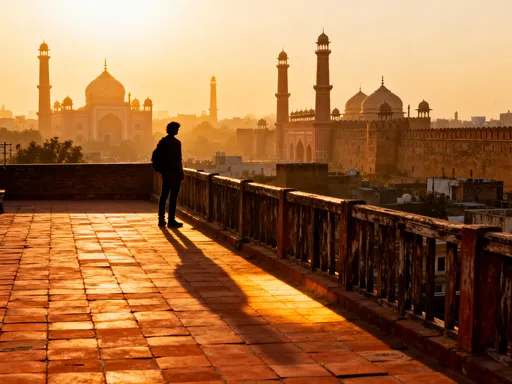
Cairo is a city of deep spirituality. Minarets rise above the skyline, the call to prayer echoes five times a day, and religious devotion is woven into daily life. For visitors, this means navigating sacred spaces with care—even if you’re not religious. Mosques, religious schools, and conservative neighborhoods require a level of respect that goes beyond etiquette; it’s about honoring a way of life.
My visit to Al-Azhar Mosque was a lesson in humility. I had read about dress codes, but nothing prepared me for the quiet intensity of the space. Women were given long cloths to cover their hair and shoulders; men were asked to remove shoes before entering. Inside, the air was still. Men prayed in rows, their movements synchronized, their whispers blending into a soft hum. I walked slowly, eyes lowered, aware of my presence as an outsider.
Yet, I saw other tourists taking selfies in front of prayer halls, laughing loudly near quiet courtyards, or wearing shorts and tank tops despite signage. These actions weren’t malicious—but they were disrespectful. Sacred spaces are not photo backdrops. They are places of reflection, devotion, and community. Even if you don’t share the faith, entering such spaces requires a shift in demeanor: quieter voice, modest clothing, and restrained behavior.
The same applies to photography. While many mosques allow visitors to take pictures in designated areas, photographing people in prayer—or using flash near worshippers—is inappropriate. The goal is not to document, but to observe. I found that putting my camera away allowed me to experience these spaces more fully. The light filtering through stained glass, the scent of incense, the rhythmic recitation of Quranic verses—these are not just sights, but sensations that demand presence, not capture.
Beyond the Surface: Building Real Connections, Not Transactions
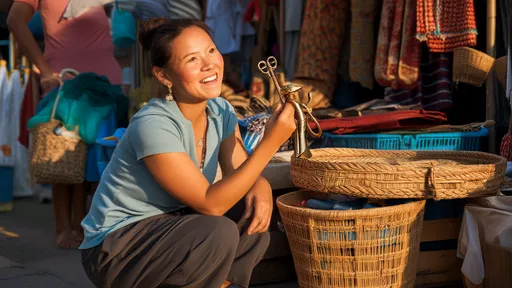
One of the most rewarding shifts in my journey was moving from transactional interactions to genuine human exchanges. At first, every encounter felt like a negotiation—over prices, directions, services. But as I slowed down, I began to see the people behind the roles. The carpet seller wasn’t just trying to make a sale; he was proud of his craft. The taxi driver wasn’t just driving me somewhere; he wanted to share his city.
I started making small efforts—learning phrases like keefak? (how are you?), ahlan wa sahlan (welcome), and basharri (slowly, gently). These weren’t perfect, but they were met with delight. Smiles widened. Voices softened. Conversations deepened. One evening, after mispronouncing “thank you” for the tenth time, my waiter laughed kindly and repeated it slowly. We ended up practicing phrases over tea. That moment wasn’t about language—it was about connection.
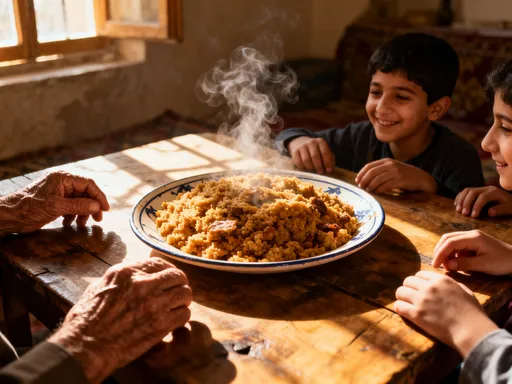
Food became another bridge. Sharing a meal of koshari or molokhia wasn’t just about taste; it was about inclusion. Invitations to join a family meal, even briefly, were acts of trust. I learned that in Egyptian culture, feeding someone is an act of care. To refuse is to reject the relationship. So I ate, even when full, and expressed gratitude not just with words, but with presence.
These moments didn’t erase cultural differences—they highlighted them, then transcended them. Awkwardness gave way to authenticity. The barriers of language, custom, and assumption melted in the warmth of shared humanity. I stopped seeing myself as a visitor and began to feel, however briefly, like a guest.
Conclusion: Embracing the Messy Middle
Traveling through Cairo taught me that cultural understanding is not about getting it right. It’s about being willing to get it wrong—and keep going. Every misstep—a misread gesture, a poorly timed question, an unintentional slight—was a lesson in humility and growth. The discomfort I felt wasn’t a sign of failure; it was a sign of engagement.
Cairo is not a checklist of monuments. It is a living, breathing conversation between past and present, local and global, tradition and change. To experience it fully is to embrace the messy middle—the moments of confusion, the unscripted encounters, the quiet realizations that come when you stop trying to control the journey and let it shape you.
To future travelers, I offer this: come with curiosity, but leave behind assumptions. Seek not just the sights, but the soul of the city. Learn a few words, accept a cup of tea, pause before you photograph. Let the rhythm of Cairo recalibrate your own. Because the greatest souvenir you can bring home isn’t a trinket from Khan El Khalili—it’s a deeper understanding of what it means to connect across cultures. And that, more than any pyramid, is timeless.