You Won’t Believe What Hiking in Yosemite Reveals About Its Hidden Festival Soul
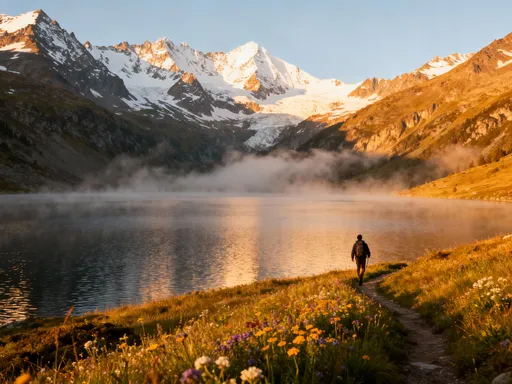
Yosemite National Park isn’t just towering cliffs and thundering waterfalls—it’s alive with culture, especially when you hike deep into its trails during local gatherings. I discovered how footpaths lead not only to scenic peaks but also to vibrant community moments where nature and tradition meet. This is more than a trek; it’s a journey into the heart of American outdoor spirit. With every step along shaded switchbacks and sunlit meadows, hikers can encounter something unexpected: the quiet pulse of celebration, stewardship, and shared heritage that flows through Yosemite’s trails as surely as its mountain streams.
Where Trails Meet Tradition
Most visitors arrive at Yosemite with cameras in hand, aiming for iconic views like Tunnel View or Glacier Point. These sights are undeniably breathtaking, but they often represent only the surface of what the park offers. For those willing to lace up their boots and walk beyond the parking lots, a different kind of discovery unfolds—one that blends physical effort with cultural connection. Hiking becomes more than exercise or sightseeing; it transforms into a form of participation. Along the trails, especially during certain times of year, you may stumble upon small gatherings where park rangers, local families, and volunteers come together not just to enjoy the landscape, but to honor it.
These moments are not staged for tourists. They emerge organically from a deep-rooted respect for the land. Whether it's a group sharing stories around a campfire, children learning traditional weaving techniques from Native elders, or hikers joining a trail cleanup with a sense of shared purpose, these experiences reflect a living culture rooted in place. The rhythm of hiking—steady, rhythmic, unhurried—creates space for such encounters. Unlike driving from viewpoint to viewpoint, walking allows time to notice subtle changes in the environment and in human presence. It opens the door to conversations, to silence, and to connection.
This blend of movement and meaning is what makes Yosemite unique among national parks. It’s not merely preserved; it’s actively celebrated. And the trail, in this context, becomes more than a path—it becomes a thread weaving together people, history, and nature.
The Pulse of Yosemite: More Than Just Scenery
When most people think of Yosemite, they picture El Capitan rising like a granite sentinel, or Bridalveil Fall cascading down a sheer cliff face. These images dominate postcards and travel brochures, shaping global perceptions of the park. But Yosemite’s true identity extends far beyond its geological wonders. It is a place shaped by centuries of human presence, from the Ahwahneechee people who first called this valley home to the conservationists like John Muir who fought to protect it. Today, that legacy continues through seasonal events that blend recreation with reverence.
One such event is the annual Yosemite Facelift, a park-wide cleanup initiative that brings together hundreds of volunteers each September. Participants hike into remote areas carrying trash bags instead of cameras, removing litter left behind by careless visitors. What sets this apart from a typical cleanup is its atmosphere—it feels less like labor and more like a festival. Music plays softly at base camps, children help sort recyclables, and rangers lead educational talks about native plants and watershed health. The event embodies a core value: that loving nature means caring for it actively, not just admiring it passively.
Similarly, the Yosemite Conservancy supports programs that celebrate both ecological and cultural preservation. Their sponsorship of Native American cultural demonstrations—featuring basket weaving, storytelling, and traditional song—invites visitors to understand the park as a living cultural landscape, not just a scenic one. These gatherings typically occur in open-air amphitheaters near Yosemite Village or along accessible trails, allowing hikers to pause and engage. The presence of elders sharing ancestral knowledge under the shade of pine trees adds a layer of depth to the hiking experience—one that cannot be found in guidebooks.
These events reveal a truth often overlooked: Yosemite is not frozen in time. It breathes, evolves, and celebrates. Its spirit is carried forward not only by park staff but by ordinary people who choose to participate. And for the hiker willing to slow down, this pulse of community life becomes part of the journey.
Hiking as a Gateway to Cultural Immersion
There is a fundamental difference between seeing a place and experiencing it. Driving through Yosemite offers visual splendor, but hiking offers intimacy. When you walk, your senses sharpen. You hear the rustle of a deer in the underbrush, smell the damp earth after a morning shower, feel the texture of bark on a Jeffrey pine. And crucially, you become visible and approachable to others on the trail. This visibility fosters connection.
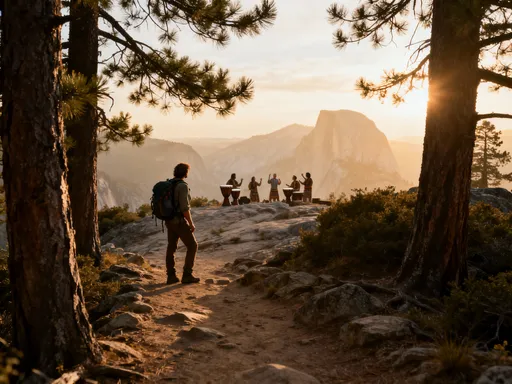
During peak event seasons—typically late spring through early fall—hikers frequently encounter informal cultural moments. At trail junctions near Tuolumne Meadows, for instance, it’s not uncommon to find small groups gathered for impromptu music sessions. A fiddle player might sit on a log, joined by a banjo or a hand drum, their melodies echoing across the alpine meadow. These aren’t performances for an audience; they’re expressions of joy shared among fellow travelers. Other times, rangers host pop-up talks at popular rest stops, discussing everything from bear safety to the history of the Mariposa Battalion.
These interactions are fleeting but meaningful. They remind hikers that they are part of a larger community of nature lovers. Unlike crowded overlooks where people snap photos and quickly move on, the trail encourages lingering. A hiker resting at a campsite might be invited to join a circle where someone shares a story about their first time seeing Half Dome. Another might learn how to identify edible plants from a seasoned backpacker. These exchanges, though unstructured, form the social fabric of the park.
Slow travel, therefore, is not just a trend—it’s a pathway to authenticity. By covering fewer miles per day, hikers gain more than scenery; they gain insight. They begin to see Yosemite not as a destination but as a shared space, shaped by countless individual and collective experiences. And when those experiences include cultural expression—music, storytelling, stewardship—it deepens the emotional resonance of the journey.
Festival Culture on the Trail: Real Examples from the Park
While Yosemite does not host large-scale music festivals or commercial events, it does support a range of low-key, meaningful gatherings that align with its mission of preservation and education. These are not advertised with billboards or social media campaigns; they are listed quietly on the National Park Service website, open to all, and deeply rooted in community values.
One of the most significant is the Yosemite Conservation Heritage Day, held each summer. This event celebrates the park’s dual commitment to environmental protection and cultural recognition. Activities include guided hikes focused on native plant restoration, workshops on sustainable camping practices, and demonstrations by members of the Southern Sierra Miwuk Nation. Children can participate in hands-on crafts, such as making acorn meal or learning traditional games. The atmosphere is warm and inclusive, with park staff greeting visitors by name and encouraging questions. What makes this day special is its emphasis on continuity—the idea that conservation is not a one-time effort but a tradition passed from generation to generation.
Another example is the series of ranger-led full moon hikes offered during the summer months. These nocturnal walks attract hikers seeking a different kind of beauty—one defined by shadow, silence, and starlight. As the group moves along the Mist Trail or through Mariposa Grove, rangers pause to share stories about the park’s history, including the role of early park rangers and the challenges of managing fire ecology. At certain points, participants are invited to stand in silence, listening to the night sounds of owls, crickets, and distant waterfalls. These hikes feel ceremonial, almost sacred, reinforcing the idea that Yosemite is not just a place to visit, but a place to reflect.
Even routine activities like trail maintenance take on a celebratory tone when done collectively. Volunteer days organized by the Yosemite Climbing Association or the American Hiking Society often end with shared meals, informal awards for “most litter collected,” and group photos. These moments of camaraderie transform what could be seen as work into a form of communal celebration. They underscore a simple truth: caring for the land is an act of love, and love naturally seeks expression.
For the observant hiker, these events are not distractions from the natural experience—they are integral to it. They reveal that human culture and wilderness are not opposites, but companions.
Choosing the Right Trail for a Cultural Hike
Not all trails offer the same opportunities for cultural engagement. While remote routes like the High Sierra Trail provide solitude and stunning alpine views, they are less likely to intersect with organized events. For those seeking a blend of nature and cultural connection, certain areas of the park are particularly well-suited.
Yosemite Valley is the most accessible and event-rich area. Its central location makes it a hub for ranger programs, cultural demonstrations, and seasonal celebrations. Trails like the Valley Loop Trail or the path to Lower Yosemite Fall are flat, family-friendly, and frequently used for guided walks and educational hikes. The Ansel Adams Gallery and the Yosemite Museum often serve as starting points for these activities, making them easy to locate and join.
Wawona, located near the park’s southern entrance, is another excellent choice. Home to the historic Wawona Hotel and the Mariposa Grove of Giant Sequoias, this area hosts several cultural events each year. The Mariposa Grove Restoration Project, for example, includes volunteer days where visitors can learn about sequoia ecology while helping maintain boardwalks and trails. The nearby Pioneer Yosemite History Center also offers living history demonstrations, where costumed interpreters show 19th-century crafts and farming techniques.
For those seeking higher elevation and cooler temperatures, Tuolumne Meadows is ideal during the summer months. This subalpine meadow hosts ranger-led wildflower walks, stargazing events, and the annual Tioga Pass opening celebration, which marks the reopening of the eastern entrance road after winter snows. The open landscape encourages gathering, and it’s common to see families picnicking, musicians playing, and children exploring the meadow’s streams.
Timing is equally important. Most cultural events occur between May and September, when visitor numbers are highest and weather conditions are favorable. The National Park Service website provides a detailed calendar of events, including ranger talks, full moon hikes, and special programs for children. Checking this calendar before planning a trip ensures that hikers can align their itineraries with opportunities for deeper engagement. It’s also wise to call the park’s information line or visit a visitor center upon arrival to learn about last-minute gatherings or changes in schedule.
Equally important is knowing when to seek quiet. Some areas, particularly near sensitive habitats or sacred sites, are designated as quiet zones. Respecting these spaces means speaking softly, avoiding music, and refraining from large group activities. This balance—between celebration and reverence—is essential to preserving Yosemite’s cultural and natural integrity.
What to Pack (and What to Leave Behind)
Packing for a cultural hike in Yosemite requires more than just physical preparation—it demands mindfulness. The goal is to engage meaningfully with the environment and its people without disrupting the delicate balance of the park.
Start with the essentials: sturdy hiking boots with good ankle support, moisture-wicking clothing in layers, a reliable water filter or purification system, and a map or GPS device. A lightweight backpack with a rain cover is also recommended, as afternoon thunderstorms are common in the Sierra Nevada during summer. Sun protection—hat, sunglasses, and sunscreen—is crucial at high elevations, where UV exposure is intense.
But beyond the physical gear, consider what intangible items to bring: curiosity, respect, and a willingness to listen. A small notebook and pen can be invaluable for jotting down reflections, sketching wildflowers, or recording a ranger’s story. Binoculars enhance wildlife viewing, and a camera (without flash) allows for quiet documentation of both nature and cultural moments. However, it’s important to remember that not every moment needs to be photographed. Sometimes, the most profound experiences are best held in memory.
Just as important is knowing what to leave behind. Drones, while popular for capturing aerial views, are strictly prohibited in national parks. Their noise disturbs wildlife and disrupts the peaceful atmosphere that both hikers and cultural participants value. Similarly, amplified music—whether from a portable speaker or smartphone—should be avoided. Music on the trail, when it happens, is best shared live and acoustically, allowing it to blend naturally with the surroundings.
Equally critical is adhering to Leave No Trace principles. This means packing out all trash, including food scraps and biodegradable items like apple cores. It means staying on designated trails to protect fragile vegetation and avoiding shortcuts that erode soil. During cultural events, it means respecting personal space, asking permission before taking photos of people, and following the lead of organizers and elders.
Finally, leave behind assumptions. Don’t expect every hike to include a festival or gathering. Some days will be quiet, and that’s okay. The beauty of Yosemite lies in its unpredictability—both in nature and in human connection. By approaching each hike with openness rather than expectation, hikers create space for genuine discovery.
Why This Experience Changes How You See Nature
Most nature tourism emphasizes escape—getting away from cities, from noise, from people. But Yosemite teaches a different lesson: that humans are not separate from nature, but part of it. When hikers encounter cultural events on the trail, they are reminded that this land has been lived on, celebrated, and protected for generations. It challenges the myth of wilderness as untouched and instead reveals it as tended, remembered, and loved.
This shift in perspective has lasting effects. Hikers who participate in a cleanup or listen to a Native elder’s story often report feeling a deeper sense of responsibility. They are no longer just visitors; they become stewards. They begin to see their role not as passive observers but as active participants in a long-standing tradition of care.
Moreover, these experiences foster intergenerational connection. A child learning to weave a pine needle basket from an elder is not just acquiring a skill—they are inheriting a relationship with the land. A teenager helping to plant native flowers after a fire is not just volunteering—they are contributing to a legacy. These acts, small as they may seem, reinforce the idea that nature is not a resource to be consumed, but a community to which we belong.
For adult hikers, particularly women in the 30–55 age range who often manage households and care for others, these moments can be especially restorative. They offer a rare opportunity to step into a space where contribution is valued, where quiet reflection is possible, and where beauty is shared rather than possessed. The trail becomes a place of renewal—not just physically, but emotionally and spiritually.
Ultimately, combining hiking with cultural immersion transforms the way we understand adventure. It moves beyond summit chasing or mileage counting and toward meaning-making. It invites us to walk not just with strong legs, but with open hearts.
Walk With Purpose, Discover With Heart
Yosemite’s true magic lies not only in its granite cliffs or roaring waterfalls, but in the quiet moments of connection that unfold along its trails. It is in the laughter of children at a cultural workshop, the shared silence of a full moon hike, the collective effort of a trail cleanup. These are not distractions from the wilderness experience—they are its essence.
For the hiker willing to go beyond the postcard views, Yosemite offers a deeper journey: one that weaves together physical challenge, cultural awareness, and personal reflection. It invites us to slow down, to listen, and to participate. It reminds us that nature is not a place to dominate, but a community to honor.
As you plan your next visit, consider not just where you want to go, but how you want to be. Choose trails that lead to engagement, not just elevation. Time your hike to coincide with events that celebrate stewardship and heritage. Pack not only for comfort, but for contribution. And above all, walk with purpose and discover with heart.
Let your footsteps be part of Yosemite’s ongoing story—one of care, connection, and quiet celebration. In doing so, you don’t just visit the park. You become part of its living soul.